Posts

UDL and Accessibility

Image
  Here, I included the entire overlook of the editing tools so you can see what it looks like while you're creating your Mindmup. As I created my review using a Mindmup, I have included a larger copy of the mindmup for easier reading. Implementing UDL Aligned Strategies in my Blog I choose to investigate the strategy of Text Sets and how I can connect it to my blog. In short, a text set it when a variety of different texts all connect to a common aspect, whether it be a theme, subject, message, etc. that is inspired by a book that students have read. By having this common aspect, students who may be reluctant to read are encouraged and motivated to do so due to read more, and allows for further and deeper engagement for students who already enjoy reading. With this in mind, it appears as though my blog already functions as a text set around the topic of Inclusive Education. In my posts, I always strive to build some level of connection to inclusion in the classroom, or at least inc...
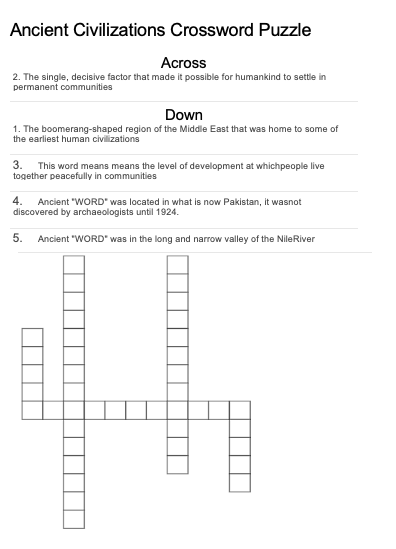
Digital Game - Ancient Civilizations Crossword

Image
  Here, I made a digital crossword based on some important definitions from the subject of Ancient Civilizations. Personally, I've always loved solving crossword, so much so that I even handed out a crossword all about me instead of goody bags to my second grade classroom! 

Playlist of my Life

Image
 

Digital Story: Planets in our Solar System

     For my Digital Story assignment, I chose to keep with the Outer Space theme explored in the previous post. In the video, I explain the order of the planets, as well as a fact about each planet. Enjoy!  

Curricular Connections: Grade 6 Outer Space

Image
This assignment was to use curriculum objectives to create a video assignment for students. After some research, I decided to use Grade 6 Science and Language Arts objectives to create a project about outer space. By allowing students to choose their own groups and choose between two topics to cover in their videos, they are able to practice self-autonomy in this project. In addition, by having the audience of the videos be future Grade 6 students, students are able to act as "mini-experts" in the subject, which also helps students to build upon their self-efficacy. Finally, other than having the requirement of having all group members speaking at some point in the video, the jobs/tasks for the video are left up to the students themselves. This way, students are able to choose their jobs within their group themselves, allowing for another opportunity for self-autonomy. By having the students include a list at the end of the video of what each student did in the creation of th...

Homework Choice Board- Time for Tic-Tac-Toe that includes a wide variety of topics and actions!

Image
              In this choice board, I decided to require the usage of the middle square, which says to "write down one nice thing that you did for someone else today-come ready to share in class tomorrow!" This was something that we always shared at the dinner table growing up, and it's something that I would want to practice with my students as well. I think that it's always important to do at least one good deed a day for someone else, without being asked or expecting of something in return. Whether it's as simple as holding the door for someone or complimenting them on their work, I believe that these simple "good deeds" can make someone's day, and help to make the world a little bit better, no matter how small the deed.  Also, I tried to include a variety  of different subjects and activities in order to cater to the interests of my students. For instance, I include drawing, writing, movement, as well as the subjects of history, writ...

ITEps Conference: Workshop Evaluation from an Inclusive Perspective

 In celebration of 10 years of the ITEps program, a conference was held this past week consisting of a variety of speakers and organizations covering topics ranging from Dyslexia, misconceptions about Islam to data on bullying. Aside from the keynote speeches, I attended courses on Dyslexia, visual impairment, bullying, and sensory regulation. In this blog post, I'm going to be taking a closer look into my course on visual impairment through the lens of Inclusive Education. Before analyzing the course, I'd like to give a summary of the course itself. Once everyone had entered the classroom, we were instructed to put on the blindfolds that were on the table in front of us; once everyone had them on, our two speakers entered the room and introduced themselves. They explained that with our blindfolds on, we were put in the same situation as they were: we couldn't see. The man explained that he had only about 5% of his sight, and that his sight was the equivalent of that moment...